
SEO planning for a new website
Your offer and objectives shape the first map. Research tests it to decide which pages make sense, what they should explain and which to develop first.
What your customers search for. On the right pages.
Your company’s strategy becomes a plan for pages, content and priorities based on how your customers search. Every development has a purpose and a place in your digital ecosystem.
Request a free auditBuild what is needed. Keep what already works.
Research helps decide what to build, what to improve and in what order. Design, content and development share a reference so every action supports your company’s objectives.
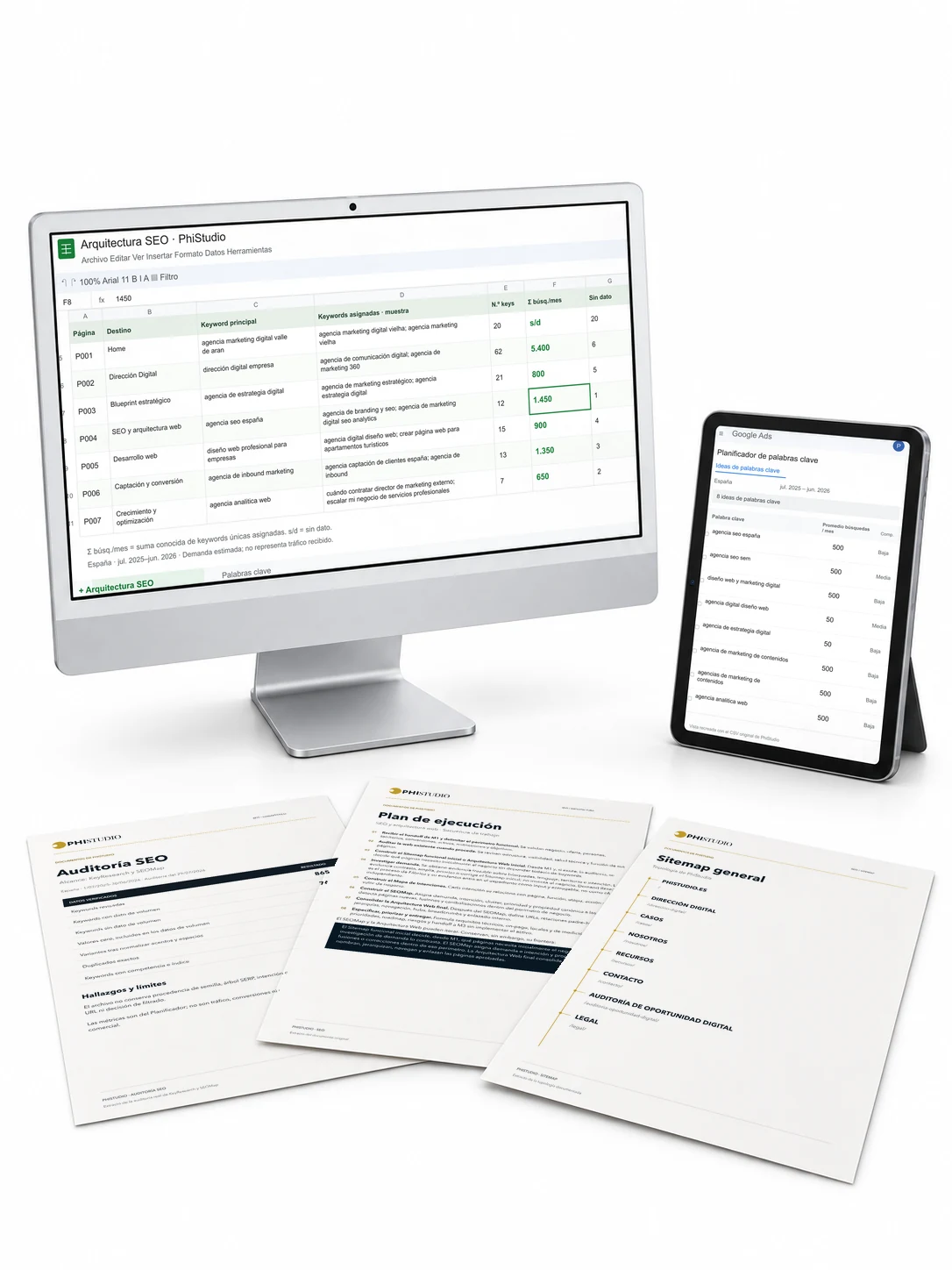
Your offer and objectives shape the first map. Research tests it to decide which pages make sense, what they should explain and which to develop first.
The audit identifies what already adds value and where there is room to improve. The plan specifies what to keep, improve, combine, redirect or rebuild to help customers through their journey.
From your offer to your website blueprint.
Your strategy and offer set the starting point. Demand research checks how your customers search and what they need, shaping the pages, content and connections that guide development.
Service and product pages that support an enquiry, booking or purchase come first. Content that helps people compare, learn and decide follows.
Your services, products and audiences shape an initial page structure. Business goals and existing assets help identify what can be used and what is missing to explain the offer.
Research explores how your customers search, what they need to resolve and the answers they find. Relevance to your offer, demand signals and competition help identify the opportunities worth pursuing and their priority.
Research refines the map: which page answers each need, what content it requires and how it connects to the rest. The hierarchy and links make the offer clear to explore.
Decisions become content and SEO requirements that guide design, copywriting and development. The roadmap orders deliverables around priorities and dependencies, giving everyone involved a shared reference.
Every page has a purpose. All follow the same strategy.
The decisions that shape your digital presence.
Research, architecture and specifications bring together the decisions that guide development. They give pages, content and features a shared reference rooted in the same strategy.
Decide which needs the website should cover and on what evidence.
Records your offer, audiences, territories and the actions your website must support. Based on these, the initial functional sitemap proposes the pages needed before testing them against search demand.
How you use it: Define the project from your business and know which needs the research must cover.
Documents how the market searches: terms, language, location and available indicators. Keyword research identifies opportunities and records its sources and limits.
How you use it: Test your proposed pages against evidence and assess which searches make sense for your offer.
Explains what a person needs behind a search: information, comparison, a purchase decision or related exploration. It connects that need to a page, its purpose and a useful action.
How you use it: Decide which answer to provide at each moment and when one page can address several searches.
Give every page a purpose, a place and clear connections.
Connects pages to their target searches, intent, topic groups and priorities. It identifies which page should meet each need and where content should be created, combined or revised.
How you use it: Coordinate structure and content, spot pages competing for the same search and justify changes before approving them.
Consolidates the approved pages: their URLs, hierarchy, navigation and internal links. It defines how main pages relate to detail pages and how people move through the site.
How you use it: Deliver a clear, buildable structure with a defined place and connections for every page.
Build with agreed SEO criteria, measurement and priorities.
Set the requirements for crawling, interpretation and search visibility: headings, metadata, structured data and technical criteria where relevant to the asset.
How you use it: Give the build team instructions and later check what was implemented. This deliverable defines requirements; configuration belongs to implementation.
Defines which actions should be observed, where data will come from and how to read relevant signals. It connects measurement to each page’s role and business goals.
How you use it: Prepare useful measurement before the build. Installing tools and events belongs to implementation.
Orders pages and changes into phases, with dependencies, risks and conditions for moving forward. It distinguishes what to address first from what still needs a decision or preparation.
How you use it: Organise actions and coordinate development in stages, with clear priorities and responsibilities.
An audit is part of the process if you have a relevant existing website; local SEO is planned when location matters to acquisition.
Depending on your projectWhen an existing website matters to the project, the audit reviews its structure, visibility, content and technical condition. It documents problems, reusable assets and necessary changes.
How you use it: Decide what to keep, fix, merge, redirect or remove while considering dependencies and risks.
When customer acquisition depends on location, this plan defines the searches, pages and local signals the project needs. It includes relevant Google Business Profile requirements within the agreed scope.
How you use it: Guide your presence towards the areas you serve. Creating or optimising profiles and pages belongs to implementation.
The documentation belongs to your company and provides a shared foundation for building and evolving the website.
A clear working relationship
Your offer, customers and objectives guide the research and the plan’s priorities. The foundation established in Digital Strategy lets us interpret searches in light of your company’s needs. If it already exists, we assess and use it; pending decisions are resolved at the depth your project requires.
The plan brings together research, maps, architecture, requirements and priorities. It guides the coordination of design, content and features in Web Development and Digital Assets. The documentation belongs to your company and lets your team or other specialists work to the same criteria.
Yes. The audit identifies what is worth keeping and what needs changing. The plan may propose focused improvements, reorganisation or rebuilding, depending on the evidence. If URLs change or a migration is needed, it specifies redirects and precautions for implementation.
The scope is adapted to relevant territories, locations and languages. It can also investigate conversational questions and comparisons where useful signals exist. Sources and limitations are recorded: translating keywords does not replace researching a market or guarantee a recommendation from a search engine or assistant.
At delivery, you know which pages to develop, why they exist and what they should enable. After implementation, the measurement plan supports observation of visibility, relevant visits and actions such as enquiries or bookings. It does not guarantee rankings or sales: results also depend on execution, your offer and competitors.
The proposal sets out the work, schedule and terms according to the website’s condition, services, languages and research required. The plan guides development priorities; Growth and Optimisation then connects SEO monitoring, results and improvements within the agreed ongoing work.
Identify what your website needs now.
An initial look at your website and objectives to identify what SEO research could contribute, what is worth improving and where to start.
Request a free audit We review your request and project fit before confirming the audit.