
Ideal customer and priority audience
The work identifies whom your offer serves best, what they need and what holds them back from choosing. Messages and resources focus on the people who matter.
A clear direction before you build.
Your offer and customer knowledge are tested against the market to set the direction of your marketing. A shared strategy orders priorities and guides the development of the assets your business needs.
Request a free auditYour value, clearly defined. Your next steps, clear.
Positioning, communication, website and lead generation follow the same criteria. Clear priorities focus time and resources where they can bring greater value to your business.
The work identifies whom your offer serves best, what they need and what holds them back from choosing. Messages and resources focus on the people who matter.
What sets you apart and how to demonstrate it become clear. Your communication explains why customers should choose you with reasons your business can support.
The work distinguishes what can be used, what is missing and what should come first. Investment follows your company’s objectives and capacity.
From knowledge of your business to a roadmap.
Your company’s experience and the state of its assets are tested against the market. That analysis informs decisions about positioning, communication and what to develop next.
A foundation grounded in your business.
Your offer, objectives and existing assets are reviewed alongside your team’s knowledge. The interview reveals strengths, constraints and questions still to resolve.
Tested against the market.
Competitors and available customer signals help distinguish a meaningful difference from a hypothesis that still needs evidence.
Criteria for choosing.
The priority audience, value proposition and messages your business can support are defined. You validate key decisions before they guide the work.
Work guided by one direction.
The plan connects actions, assets and priorities. The roadmap sets out what to develop first, what needs an earlier foundation and how to assess its contribution.
A shared direction. Clear priorities for each investment.
A strategy you can put to work.
Decisions are documented in a shared foundation connecting diagnosis, positioning, communication and priorities. Each document guides the work and helps maintain clear criteria as the project develops.
Understand the starting point and how your offer is sustained.
Reviews your assets, digital presence, positioning and competitors. It separates strengths, gaps and opportunities using available sources, and flags questions that need more evidence.
How you use it: Understand your starting point before deciding what to keep, strengthen or investigate.
Captures knowledge from interviews and business sources: experience, goals, ambitions, constraints and your own language. It organises agreements, tensions and open questions among key people.
How you use it: Check that the strategy reflects your business and make knowledge currently held in conversations explicit.
Explains how your business creates, delivers and captures value: whom it serves, what it offers, where revenue comes from and what capabilities it needs. It also records relevant limits, risks and metrics.
How you use it: Assess whether an offer, channel or investment fits the way your business works.
Choose whom to serve, what value to defend and which principles to maintain.
Defines the place you want to occupy in your market, whom you matter to and how you differ from alternatives. It links customer needs to a clear promise and reasons your business can substantiate.
How you use it: Explain why customers should choose you across your offer, presentations and commercial pages.
Records your purpose, beliefs and principles, along with the limits and trade-offs that shape your business. It makes clear what you are building and which commitments must guide decisions.
How you use it: Judge whether a customer, partnership, opportunity or growth path fits your identity.
Describes people who buy, decide or influence a purchase: their needs, motivations, objections and decision moments. It maps where they need information, confidence or a response.
How you use it: Adapt your offer and messages to relevant people, and decide what each stage of their journey requires.
Give your narrative, messages and visual expression one direction.
Builds your central narrative from your origins, purpose, value proposition and customers. It organises the ideas that explain what you do, why it matters and what your offer means.
How you use it: Create presentations, pages and content that tell a consistent story grounded in reality.
Defines how your business speaks, writes and presents itself: personality, tone, language and visual criteria. It guides those producing communication towards a recognisable expression.
How you use it: Brief writers, designers and AI tools clearly. Full brand identity design has a separate scope.
Apply the strategy with priorities, criteria and a shared knowledge base.
Turns the strategy into practical guidance: decision rules, responses to recurring situations, boundaries and conditions for moving forward.
How you use it: Guide repeated decisions with your team and partners while keeping everyday work aligned.
Connects goals, audiences, channels and campaign directions with acquisition and conversion. It sets responsibilities and measures so each action serves a strategic purpose.
How you use it: Decide what to activate, for whom and how to assess its contribution. Campaign production and management are separate.
Inventories what you have and what needs building: website, pages, content, systems and other assets. It links each need to a priority, dependencies and indicators for tracking progress.
How you use it: Commission the next piece of work with a clear purpose and know what must be ready first.
Organises business documents, sources, decisions and vocabulary for people and AI tools to consult. It distinguishes approved information from pending work and sets usage and permission boundaries.
How you use it: Give AI a reliable reference and assess its responses against your business information.
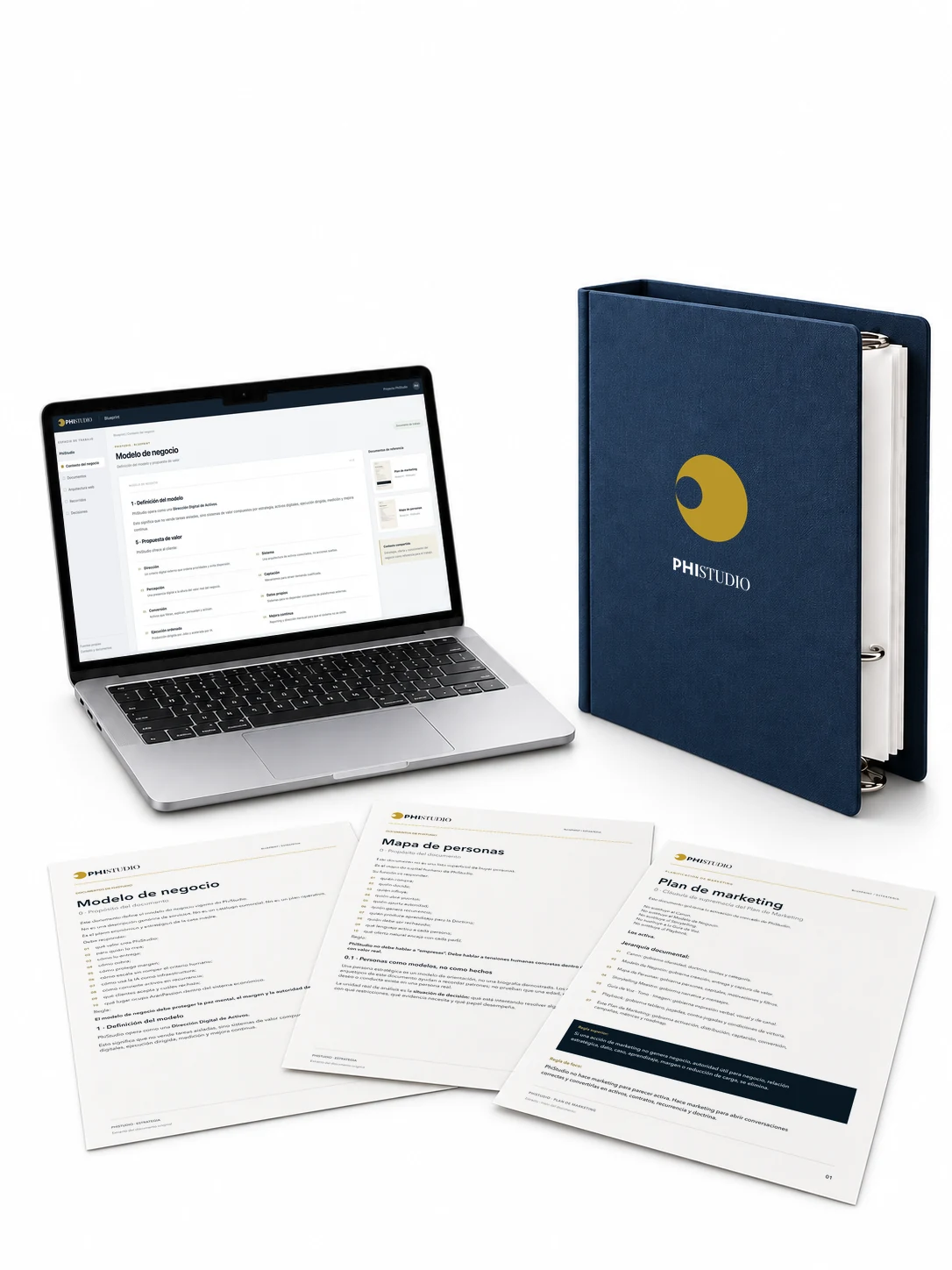
A selection of key documents in a physical folder supports consultation and important conversations.
The digital repository brings sources and decisions together so everyone involved can work from the same reference.
Validated sources, decisions and messages provide reliable context for reviewing and checking AI assisted work.
The documentation belongs to you and remains available to guide future development.
A clear working relationship
Not necessarily. Existing work that remains valid is put to use. The proposal identifies missing decisions about audience, value proposition, messages or priorities and the depth needed to resolve them.
Your experience is the starting point: you join an interview, share relevant information and validate key decisions. PhiStudio directs the analysis, tests the findings and turns the work into a documented strategy. The proposal sets out who participates and when progress is reviewed.
The audit offers an initial view of your situation and a possible priority. Consultancy researches and tests the business to develop positioning, messages and a documented roadmap. The two have different depths and scopes.
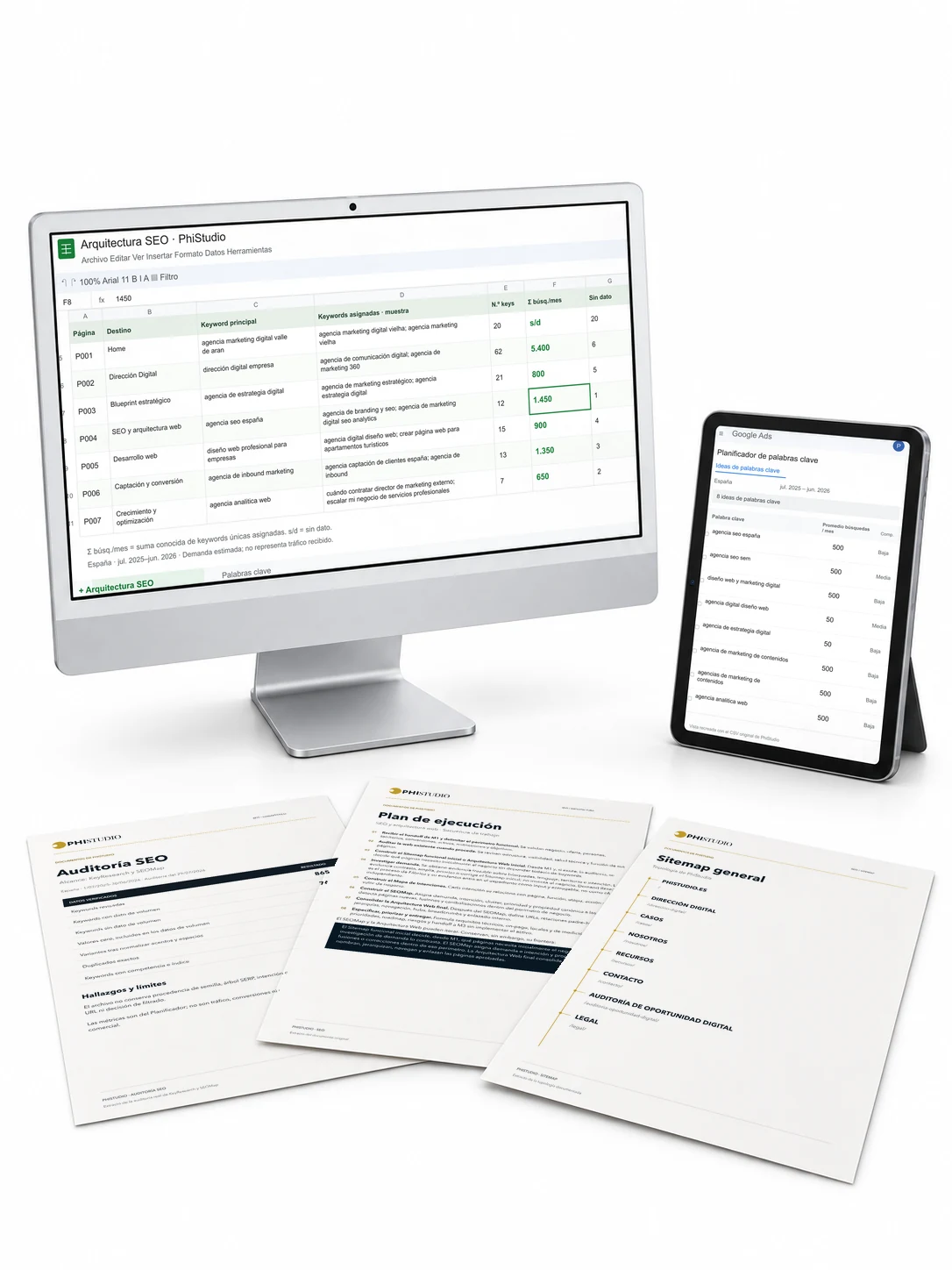
The strategy guides your team and the next stages of development. SEO and Web Architecture defines searches and the page plan; Web Development and Digital Assets builds the agreed assets; Lead Generation and Conversion organises the contact journey. The results inform ongoing monitoring and help review priorities.
Approved sources, decisions and messages provide your business with context for reviewing and checking AI assisted work. People still decide what to apply. If you need a tool configured for your business, that is scoped as a separate project.
Before starting, you receive a proposal with deliverables, schedule and price. The work depends on available information, the people involved and the complexity of your offer or markets. Reviews and delivery conditions are agreed from the outset.
Clarify your next step.
An initial review of your offer, assets and objectives to recognise the foundation already in place and guide digital development priorities.
Request a free audit We review your request and project fit before confirming the audit.