
SEO and website visibility services
Searches and the state of your pages guide updates to content, links and local presence. Your offer remains consistent and can respond to new opportunities for visibility.
Your marketing follows a plan. Someone takes responsibility for moving it forward.
SEO, content, campaigns and website improvements follow a roadmap connected to your company’s goals. Ongoing direction organises the calendar, coordinates delivery and analyses results to refine priorities. You know what is progressing, what it contributes to the business and what comes next.
Request a free auditEverything is connected. Under one direction.
Strategy becomes a calendar of actions and improvements. Assets, channels and results are reviewed together to set priorities and coordinate the people involved. Your business has a lead who knows its journey, maintains continuity and adapts the plan when new needs or opportunities appear.
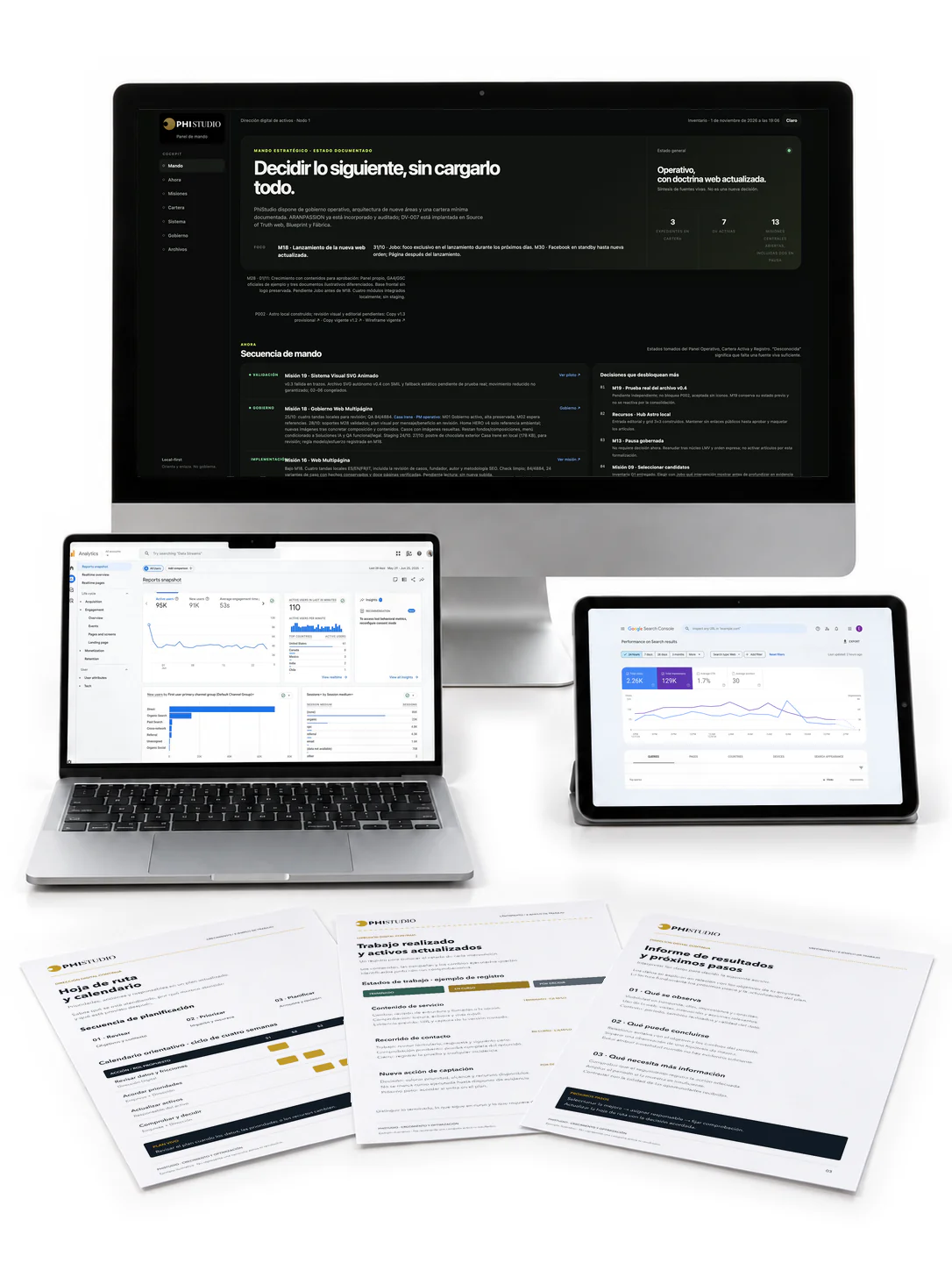
Your company has direction. Its digital operations do too.
Concrete work. A purpose in your business.
Each area contributes to the same plan: maintaining visibility, developing customer relationships and improving the assets that help people choose you. Your company’s priorities determine where to act.
Searches and the state of your pages guide updates to content, links and local presence. Your offer remains consistent and can respond to new opportunities for visibility.
The editorial calendar organises the creation and updating of pages, articles and posts. Content is adapted to each channel and scheduled with a purpose: explaining your offer, answering customers’ questions and maintaining an active presence.
Social and email campaigns are prepared, launched and monitored around a goal and a calendar. Newsletters, segmented messages and existing sequences maintain contact and present relevant offers according to people’s interests and permissions.
Visits, enquiries and journeys are interpreted to understand where opportunities come from and where progress becomes difficult. Changes to messages, forms or pages are assessed using the available data.
Your assets’ content, experience and functions adapt to emerging needs. Improvements and connections between tools support your customers’ journey and your team’s work, following the plan’s priorities.
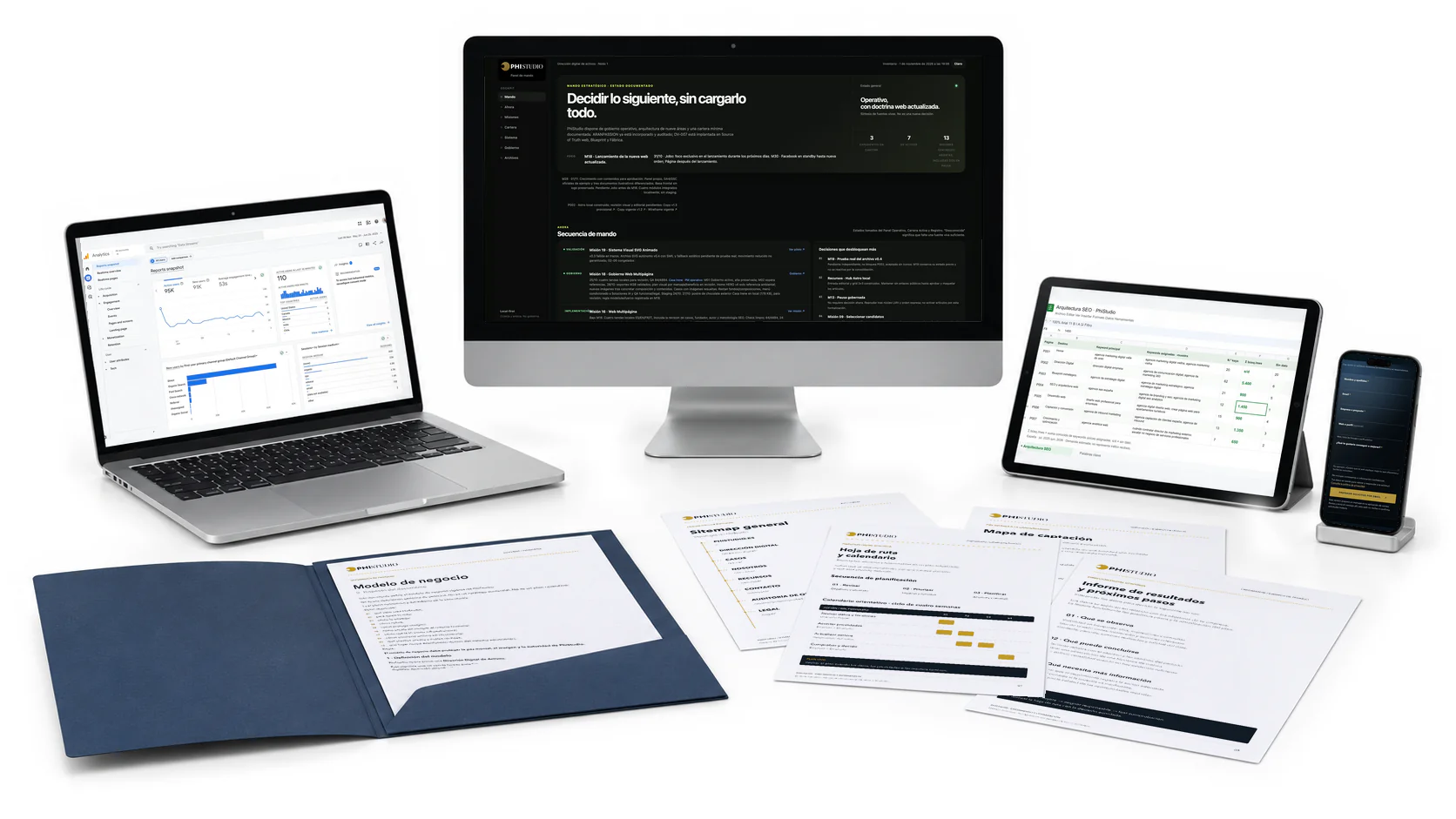
What happens becomes clear. What matters becomes action.
A page receives relevant visits but generates few enquiries. This example shows how a signal can guide an improvement and the next decision.
The signal is put in context.
The review considers where visits come from, what people seek and how they move through the page. The message, form and mobile experience help identify what needs attention.
There is a reason for the improvement.
The review guides what to test: clarifying the offer or making an enquiry easier. The plan defines the change, who handles it and the signals used to evaluate it.
The decision takes shape.
Messages, the call to action and the form are adjusted around the chosen priority. Delivery is coordinated with the responsible team, and the journey is checked before publication.
Learning guides the next step.
The system is checked, and subsequent enquiries are considered alongside incoming traffic. The evidence helps decide whether to keep the change, adjust it or gather more information.
An example of the work. Decisions depend on each project’s data and context.
A shared direction. The resources your plan needs.
Your team, providers and PhiStudio can contribute according to the capacity each action needs, with shared responsibilities and working criteria.
Your team moves forward with a shared reference.
Priorities become a plan that guides your team and providers. Instructions, responsibilities and review points are clear, with follow-up on the work and its results.
The plan has the capacity to move forward.
Direction is supported by PhiStudio’s production capacity for content, campaigns, SEO or website improvements. Disciplines, volume and deliverables follow the planned work.
Ongoing work can start with assets built by other providers. When the plan calls for a new website or a lead generation system, Web Development and Digital Assets and Lead Generation and Conversion define those projects and their coordination with the ongoing work.
The work is visible. The decisions are explained.
A shared reference helps you follow the plan, review completed work and understand your assets’ contribution. Deliverables reflect the capacity agreed for each period.
Priorities, actions and responsibilities are organised in an updated plan. You know what is receiving attention, why it matters and what is planned next.
Content, campaigns and implemented changes are identified alongside their checks. You can distinguish completed work, work in progress and items that need a decision.
Data is explained in relation to your company’s goals: what is observed, what can be concluded and what needs more time or information. This interpretation informs the next steps and updates to the plan.
At the agreed frequency, reports are discussed with you to understand results, answer questions and decide the next actions. Agreements, priorities and responsibilities are documented to keep the work moving forward.
Explore what to measure in digital marketing to make decisions and how to distinguish activity from progress.
A clear collaboration
Yes. Reviewing objectives, assets, access and data establishes the starting point. Your providers can continue working under shared direction. If decisions about your offer or audiences remain open, Digital Strategy provides that foundation to the depth required.
Direction organises priorities, the calendar and responsibilities. Your team and providers can carry out the actions, or the agreement can include PhiStudio production. You contribute business knowledge, approve relevant decisions and review progress at the planned points.
Yes, when they form part of the plan. Content, creative assets and messages for organic campaigns are prepared, scheduled or launched, and their response is monitored. Newsletters and existing sequences are adapted to contacts’ interests and permissions. The proposal defines the objective, channels, deliverables and frequency.
Website maintenance and digital infrastructure cover updates, backups, operation, hosting, email, domain and SSL, with a separate budget and responsibilities. Growth and Optimisation directs actions and improvements around the company’s goals and analyses their results. Technical care and marketing development are coordinated.
Reports connect the work to signals relevant to your goals: visibility, enquiries, opportunities, journeys or efficiency. They explain what can be observed and what evidence supports linking it to an action. If data is missing, measurement is prepared first so future decisions have a useful foundation.
The calendar responds to your assets, objectives and delivery capacity. Regular reviews share results and adjust priorities; frequency is agreed around the project. The proposal defines deliverables, meetings, channels, response times and continuity terms, which are reviewed as needs change.
The next step for your marketing. With a clear direction.
An initial review of your assets, channels and results to see what can be used, what needs attention and how to take the work forward.
Request a free auditWe review your request and project fit before confirming the audit.