
Your own contact database
Contacts are organised by source, interest and decision stage, with purposes and permissions recorded for maintaining the relationship.
Contacts of your own. Relationships that progress.
Your website and channels work together to build a consent-based contact database, segmented by interest. Useful resources and email sequences help prospective customers decide and make it easier to enquire, book or buy.
Request a free auditInterest need not end with a visit.
Some people arrive ready to enquire; others need time and answers. Your own database lets you maintain the relationship, offer relevant information and recognise when a sales opportunity appears.
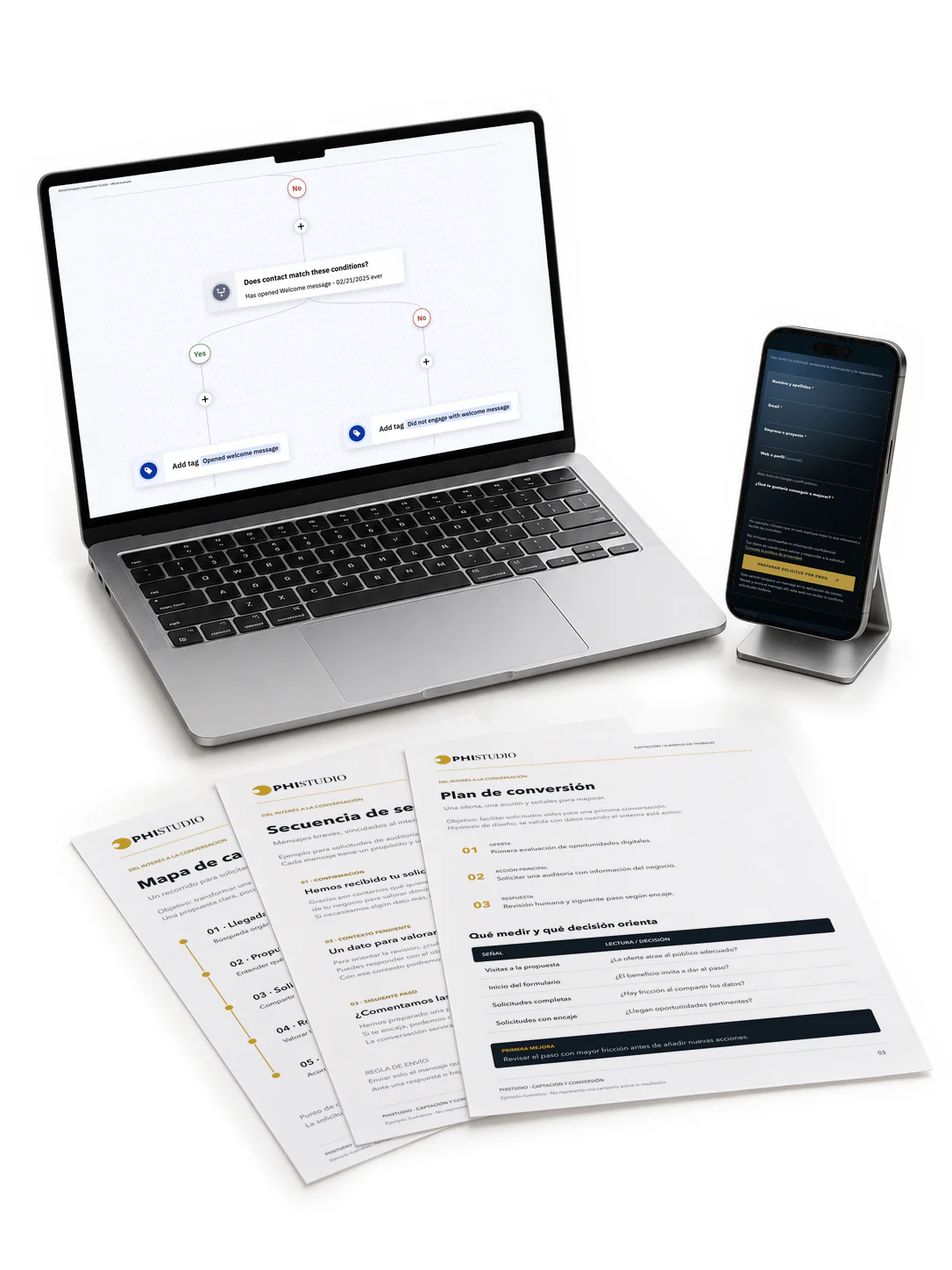
Contacts are organised by source, interest and decision stage, with purposes and permissions recorded for maintaining the relationship.
Each person receives resources and answers related to their needs and their stage of decision.
When an enquiry arrives, your team knows what interested that person and what information they received. The sales conversation begins with useful context.
Understand why your own database is a business asset and what you need to use it well.
Not everyone is ready to buy. The relationship can start earlier.
Imagine someone discovering your offer on social media while still considering their options. A practical template or guide can start a relationship that helps them decide.
A reason to stay in touch.
The post leads to a resource that answers a specific need. The person knows what they will receive and can download it; continuing a marketing relationship afterwards requires the appropriate consent.
Every contact has context.
The database records the source, requested resource and preferences. That information helps identify interests and prepare relevant messages.
Useful information while they decide.
The sequence delivers the resource, answers questions and explains the value of your offer. Messages and frequency follow the journey and recorded permissions.
The next step is clear.
When the person wants to move forward, they can enquire, book or buy. Your team receives the context to assist them, while the system records the steps it can verify.
A defined journey. Coordinated development.
Your offer, audiences and customer knowledge help define the resource, write the messages and choose the tools. The system is built or improved around what already exists, with focused reviews to validate progress.
The starting point and priorities are clear.
Existing forms, contacts and sequences are reviewed to see what works and where conversion can improve (CRO). The diagnosis defines whom to attract, what value to offer and which steps to develop, with an agreed schedule and responsibilities.
Your strategy takes shape in the system.
Lead magnets, landing pages and emails are developed from your company’s context. Project direction coordinates content, configuration and database connections; you share your knowledge and approve key deliverables.
Start with a tested system.
Forms, consent, resource delivery, sequences and connections are tested before activation with your approval. Measurement provides a starting reference for tracking actions and identifying improvements.
From first interest to opportunity. Every step connected to your strategy.
A system you can use. Progress you can follow.
The journey, resources, database and messages are connected, with access and guidance to operate the system. You know how a contact enters, what information they receive and when your team needs to step in.
The journey map and planned resources: landing page, lead magnet, form and specific content. Each piece addresses a customer need and makes the next step easier.
The structure organises sources, interests, permissions and statuses. Access, responsibilities and management rules are identified so information can be used and exported under the agreed conditions.
The agreed responses, sequences and automations are configured and tested. It is clear what happens automatically, when your team steps in and which tools support the system.
Settings and access are documented alongside the actions recorded, their sources and their limits. Your team can consult the data and maintain a shared reference for the system.
The relationship continues
Growth and Optimisation directs recurring social and email marketing campaigns, newsletters and improvements under the agreed plan. Results help refine messages, journeys and priorities.
Before you start
A clear offer, defined audiences and channels that attract interest. Digital Strategy guides that foundation; Web Development and Digital Assets provides the necessary assets. What already works is used, while open decisions are resolved within the project journey.
Yes. The diagnosis identifies which forms, content, tools and contacts can be used. Recorded information and permissions determine how the database may be used. If an existing system needs improving, conversion analysis (CRO) sets priorities and tests. The proposal specifies whether it covers diagnosis, implementation or both.
Their development is directed by your company’s context: offer, audiences and common questions. Planned resources and messages are written, and the agreed sequences and connections are configured. You share knowledge and approve the deliverables; tools and costs are identified in the proposal.
Entry points follow your channels: website, search, content, social media, business profile, links or QR codes. Lead Generation prepares the journey and initial sequences; recurring organic and email marketing campaigns are directed through Growth and Optimisation. Paid ad management is outside the current offer.
Your team or sales lead handles enquiries and closes sales. The system retains context and helps with responses and follow-up. Growth and Optimisation continues messages, content and improvements under the agreed plan.
The proposal defines deliveries, reviews and responsibilities according to the journey and connections needed. Measurement can track downloads, sign-ups and enquiries to show where to improve. Contact and sales volumes also depend on the offer, incoming interest and the sales response.
Discover where your lead generation can move forward.
An initial review of your channels, contacts and follow-up to see what can be used, what should be connected and where to begin.
Request a free auditWe review your request and project fit before confirming the audit.